
// PROJECT · IOS APP
Reserve Now
Native iOS restaurant reservation app (Swift) with dual customer and staff interfaces.
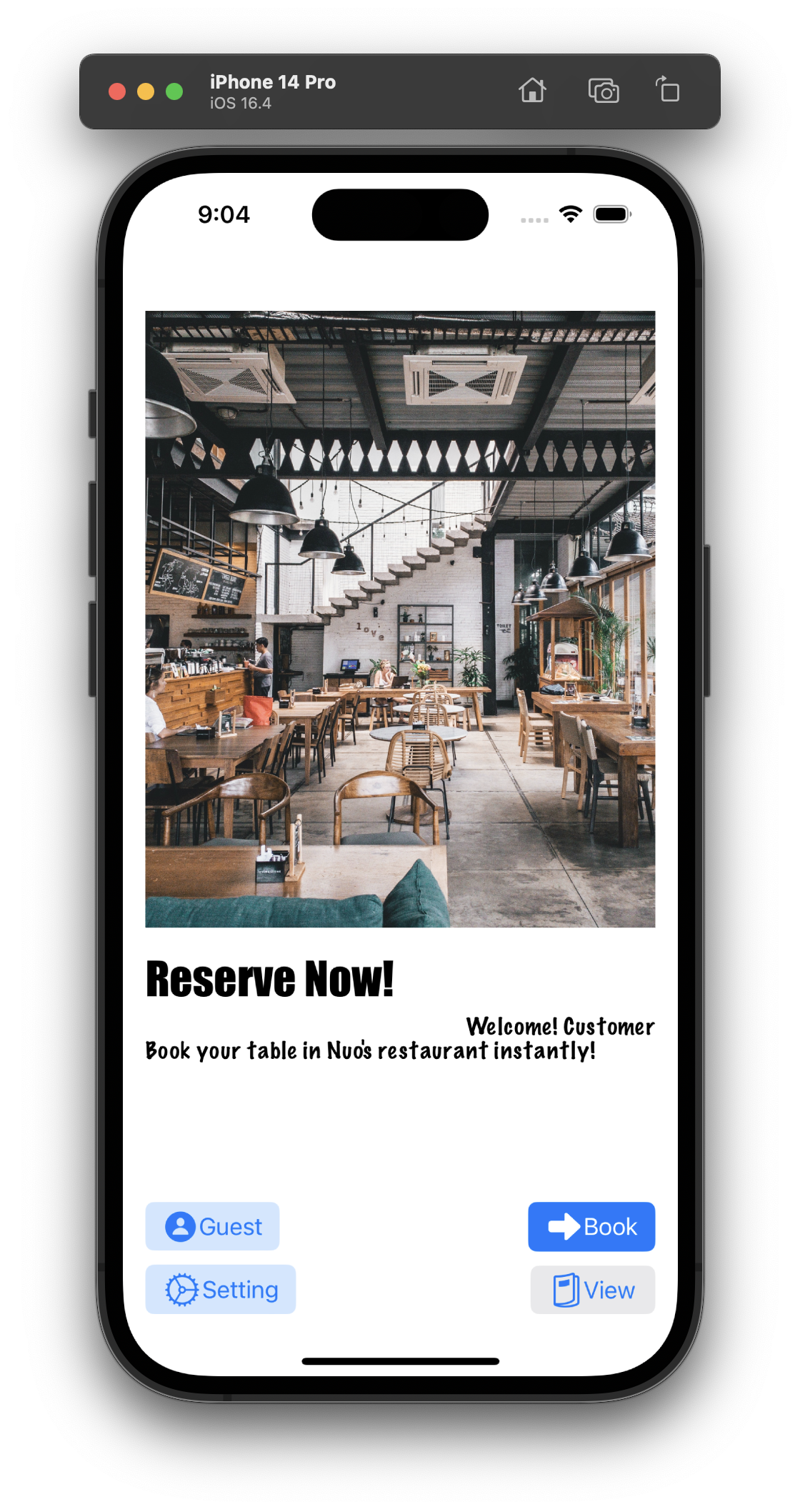
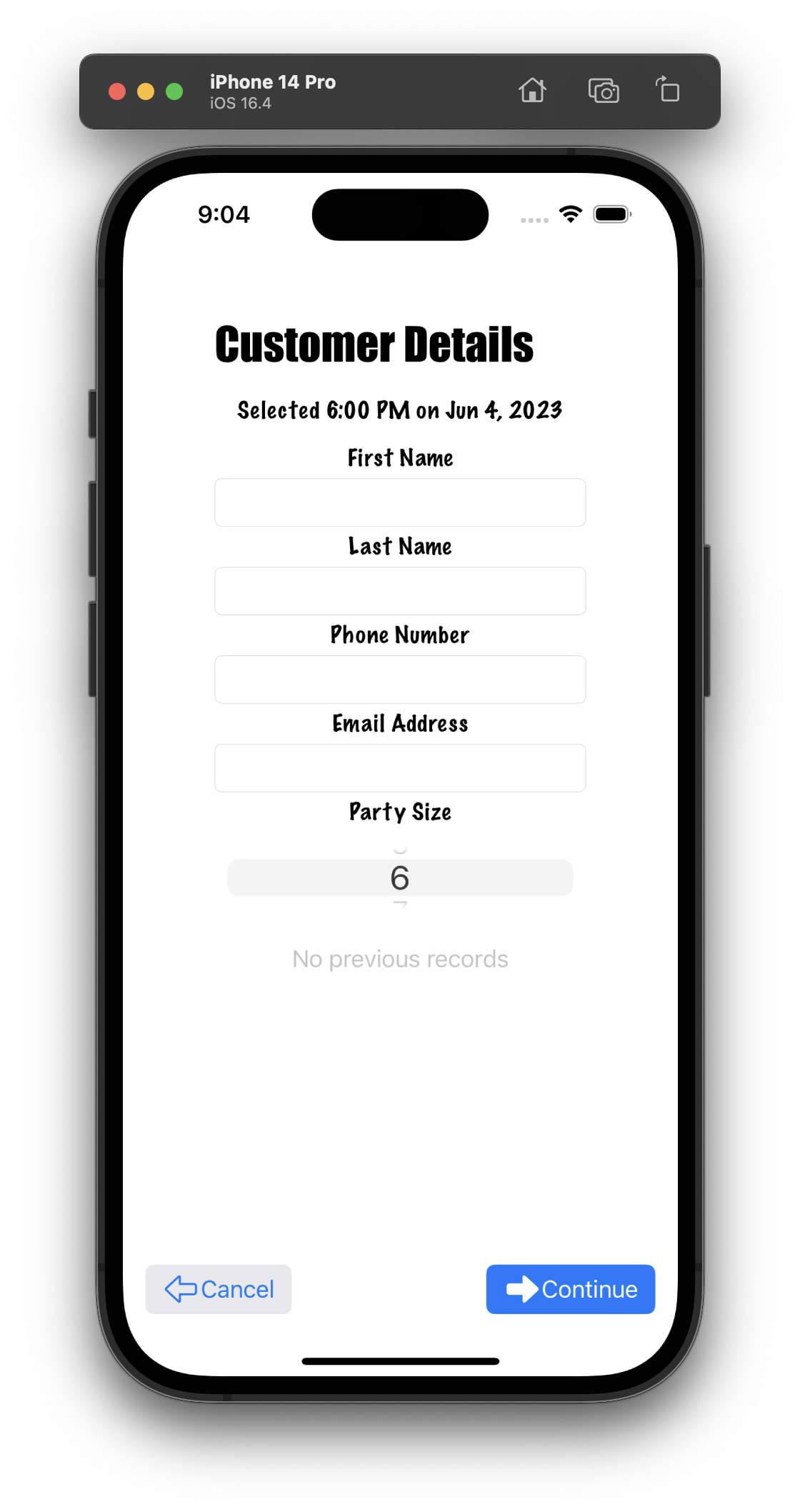
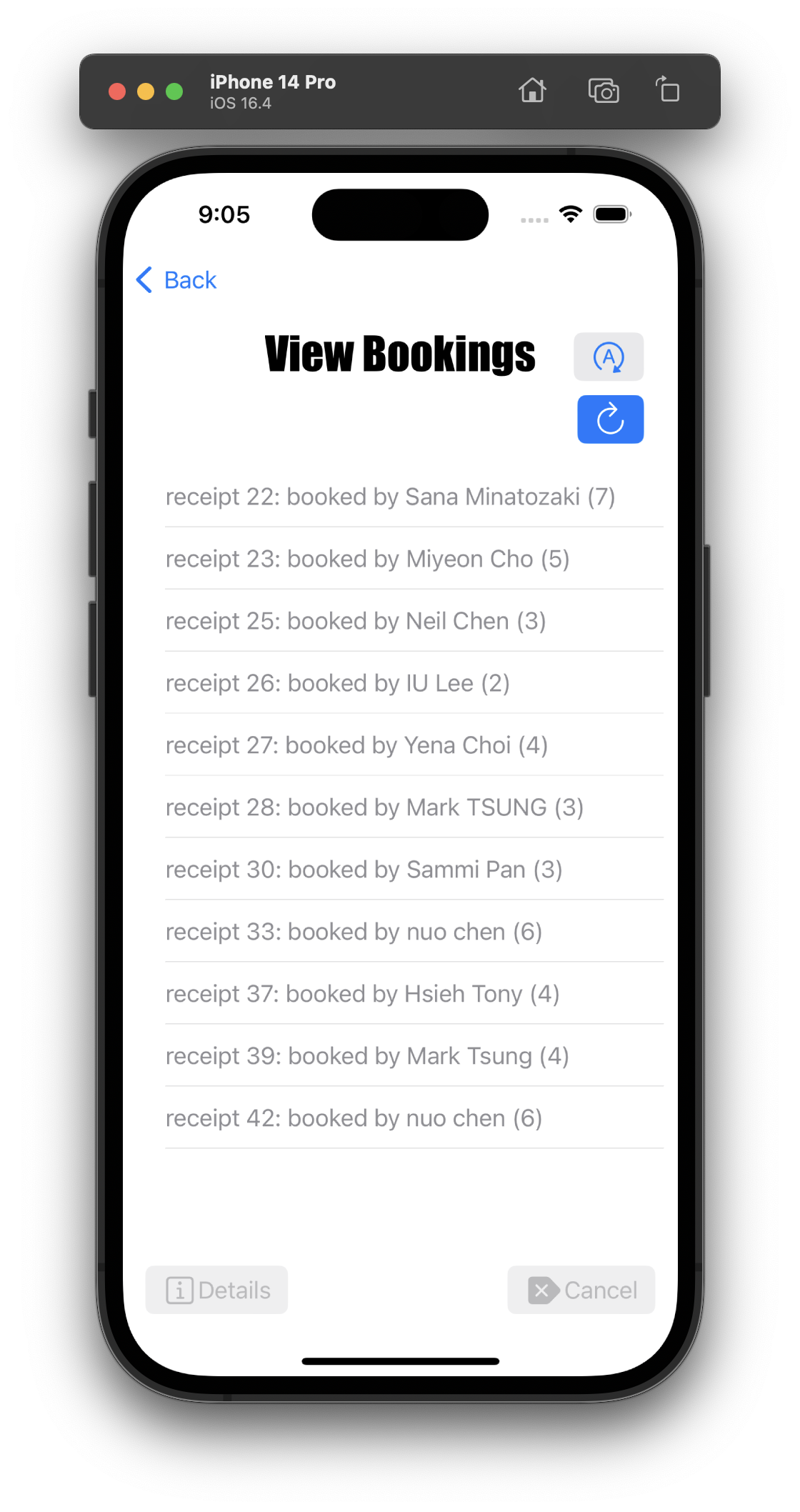
Reserve Now is a native iOS application developed for UTS iOS App Development. It provides a streamlined reservation platform with separate interfaces for customers - who can browse, book, modify, and cancel reservations - and staff - who manage and track all incoming bookings through a dedicated dashboard.
Role
Solo Developer
Contributions
- Built the complete application end-to-end in Swift using Xcode
- Designed and implemented dual-role interface system (customer / staff workflows)
- Integrated a SQL database for persistent reservation management
- Used CocoaPods for dependency management
Technical Challenges
- Talking to MySQL directly from iOS. Rather than stand up a backend for a three-week assignment, the iOS app drove a remote MySQL host through a third-party client library wrapped in Swift, executing queries and decoding returned row dictionaries. The tradeoff was latency — the free host sat in another continent, ~260-300ms per call — so the same layer kept a backup database config swappable.
- Typed model with manual row decoding. Result rows decoded into typed domain objects through conditional casts, so the rest of the app worked against real types rather than raw dictionaries.
- MVC layering that survived a mid-project pivot. Customer and staff screens were thin controllers over a shared model + database layer; when local-only booking logic was rewritten into live database calls in iteration 3, the controllers barely changed — only the data layer did.
- Validation and business rules at the edges. Null and format checks ran before any insert; party-size validation auto-adjusted to remaining availability with a hard cap so a booking could never exceed a slot’s capacity.
Lessons Learned
-
Over-relied on direct database operations from the start. CocoaPods and oh-my-sql were adopted after testing alternatives, and integrating them late — paired with database configuration and version compatibility challenges — caused delays that should have been caught earlier.
-
Originally scoped as a team project, ended up solo after teammates stopped responding / working. Picked up all the work rather than letting the project stall — compressed the timeline but sharpened end-to-end ownership of the codebase, with every screen, query, and edge case passing through one pair of hands.
Source: GitHub
 // PREVIOUS · GAME
The Tragedy of Pondiberry Lodge
// PREVIOUS · GAME
The Tragedy of Pondiberry Lodge
 // NEXT · GAME
Shatter
// NEXT · GAME
Shatter